- Home
- Treatments
- Diabetes
Atrial Septal Defect Closure
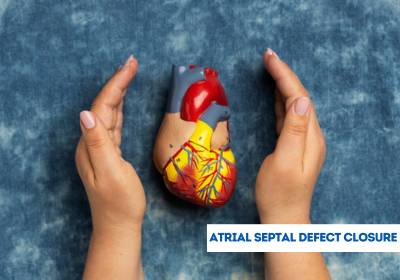
Atrial Septal Defect Closure is a procedure to repair a hole in the septum between the heart’s upper chambers. The defect allows oxygen-rich and oxygen-poor blood to mix, which can affect heart and lung function. Atrial septal defect closure can be performed surgically or through a minimally invasive catheter-based method. In the catheter approach, a small device is inserted to seal the hole. This treatment restores normal blood flow and helps prevent complications like heart failure or stroke. Contact EdhaCare team and access atrial septal defect closure in India, Turkey, Thailand, Dubai, and other leading countries with full support and assistance.
The main treatment for Atrial Septal Defect is surgical conclusion, which can be accomplished by less invasive methods like transcatheter closure or conventional open-heart surgery. This process aids in preventing ASD-related consequences like heart attack and stroke.
Atrial Septal Defect Closure – Estimated Cost
The cost of atrial septal defect closure may vary depending on the method used (surgical repair or device-based closure), hospital infrastructure, size and complexity of the defect, and the expertise of the cardiologists or cardiothoracic surgeons performing the procedure. Below are approximate costs for atrial septal defect closure closure in India, Turkey, Thailand, and Dubai:
| Country | Approximate Cost |
|---|---|
| India | USD 6,000 – 20,000 |
| Turkey | USD 12,000 – 30,000 |
| Thailand | USD 15,000 – 35,000 |
| Dubai | USD 18,000 – 45,000 |
Note: Above costs for atrial septal defect closure are estimated. Reach out to EdhaCare for exact cost of atrial septal defect closure and personalized guidance.
Top Hospitals in India for Atrial Septal Defect Closure
Here are the top hospitals in India for atrial septal defect closure. These best hospitals for atrial septal defect closure are known for their modern cardiac facilities, advanced imaging technology, and experienced teams that focus on safely closing the heart defect and improving long-term heart health.
| Hospital Name | Location |
|---|---|
| Fortis Hospital | Delhi |
| Apollo Hospital | Chennai |
| Max Super Speciality Hospital | Delhi |
| Manipal Hospital | Bangalore |
| Nanavati Max Super Speciality Hospital | Mumbai |
Leading Doctors in India for Atrial Septal Defect Closure
Looking for top doctors in India for atrial septal defect closure? EdhaCare connects you with the best doctors for ASD closure in India to ensure the most effective outcomes.
| Doctor Name | Hospital Name | Location |
|---|---|---|
| Dr. Naresh Trehan | Medanta Hospital | Gurugram |
| Dr. Asim Kr Bardhan | Apollo Hospital | Kolkata |
| Dr. Upendra Kaul | Batra Hospital | Delhi |
| Dr. Cyrus B Wadia | Jaslok Hospital | Mumbai |
| Dr. Prashanth Kr. Ghosh | Apollo Hospital | Delhi |
Who Needs Atrial Septal Defect Closure?
- Large ASD: People with large atrial septal defects that cause significant blood flow between the heart chambers.
- Symptoms Present: Individuals experiencing symptoms like shortness of breath, fatigue, or heart palpitations.
- Heart Enlargement: Patients whose heart is becoming enlarged due to the extra workload from the ASD.
- Pulmonary Hypertension Risk: If the defect increases the risk of high blood pressure in the lungs (pulmonary hypertension).
- Prevent Stroke: To lower the risk of stroke caused by blood clots passing through the defect.
- Recurrent Lung Infections: Patients prone to frequent respiratory infections.
Risks and Benefits of Atrial Septal Defect (ASD) Closure
Benefits of Atrial Septal Defect (ASD) Closure
- Improved Heart Function: ASD closure can restore normal blood flow between the heart chambers, reducing the workload on the heart. This helps prevent complications like heart failure in the future.
- Reduced Risk of Stroke: One major benefit is lowering the risk of blood clots passing through the defect, which can lead to a stroke.
- Improved Symptoms: Many patients experience relief from symptoms like shortness of breath, fatigue, and irregular heartbeats after the closure. This can lead to a better quality of life.
- Prevention of Pulmonary Hypertension: Closing the defect reduces the risk of pulmonary hypertension, a dangerous condition where high blood pressure builds up in the lungs.
- Prevents Heart Enlargement: Over time, an untreated ASD can cause the heart to enlarge. Closure helps to avoid this, maintaining a healthier heart structure.
Risks of Atrial Septal Defect (ASD) Closure
- Bleeding or Infection: As with any surgical procedure, there is a risk of bleeding or infection, but these risks are generally low.
- Heart Rhythm Problems: Some patients may develop abnormal heart rhythms (arrhythmias) after the procedure, though this is usually temporary and can be managed with medication.
- Blood Clot Risk: Though rare, blood clots can form after the procedure, potentially leading to complications like stroke or embolism.
- Device-Related Risks (if using a closure device): In cases where a device is used for closure, there’s a small risk that it may move out of place, cause tissue damage, or lead to an allergic reaction.
- Surgical Risks: If surgery is required, there are additional risks like reactions to anesthesia or complications with healing.
Treatment Procedure of Atrial Septal Defect (ASD) Closure
The treatment procedure of Atrial Septal Defect (ASD) Closure is a complex procedure which explained in given steps.
Before the Procedure
- Consultation and Diagnosis: The first step is a consultation with a cardiologist. Tests such as echocardiograms, chest X-rays, or MRIs are used to confirm the ASD diagnosis and its size.
- Pre-Procedure Tests: Blood tests and other heart-related evaluations are conducted to ensure you’re healthy enough for the procedure.
- Fasting: On the day of the procedure, you’ll be asked to fast (no food or drinks) for several hours before the operation.
- Anesthesia: You will receive either local or general anesthesia. In most cases, general anesthesia is used to keep you asleep and pain-free during the procedure.
During the Procedure
- Catheter-Based Closure (Minimally Invasive):
- A small tube (catheter) is inserted through a blood vessel in your groin.
- The catheter is guided through the blood vessels to the heart.
- A closure device is inserted through the catheter and placed over the hole in the atrial septum (the wall between the heart’s upper chambers).
- The device expands to cover the defect and is left in place. Over time, heart tissue grows around the device, permanently sealing the hole.
- Surgical Closure (Open-Heart Surgery):
- If the defect is too large for a catheter-based approach, open-heart surgery is performed.
- The surgeon makes an incision in the chest, opens the heart, and directly stitches the hole or uses a patch to close it.
- This is done under general anesthesia with a heart-lung bypass machine keeping your blood flowing during the surgery.
After the Procedure
- Recovery in the Hospital: After catheter-based closure, you may need to stay in the hospital for 1-2 days. For surgical closure, recovery may take up to a week.
- Post-Procedure Monitoring: Heart rate, blood pressure, and oxygen levels are monitored. If a catheter-based closure was performed, you will need to lie flat for several hours to allow the insertion site to heal.
- Discomfort and Pain Management: You may experience mild pain, bruising, or soreness at the catheter insertion site or around the chest incision for surgery. Pain medications are provided to help.
- Gradual Activity Increase: You’ll be advised to gradually increase physical activities. Avoid strenuous activities for several weeks.
- Follow-Up Appointments: Regular check-ups with your doctor will ensure the Atrial Septal Defect closure is successful. An echocardiogram may be performed to confirm the defect is properly sealed.